
Social media has proven an effective resource for companies looking to raise brand awareness and engage with consumers, and more people are now turning to social media as an avenue for voicing their praise as well as their criticisms of companies and their products.
But a recent survey conducted by D.C.-based research and consulting firm Clutch, which focused on consumers’ online expectations for companies, found that most expect brands to respond to their queries and concerns on social media — and have unusually high expectations for how quickly those responses arrive.
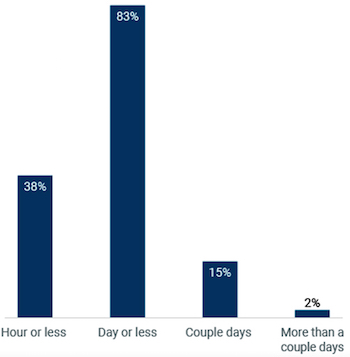 How quickly should businesses respond to social media comments? |
More than three-quarters of the Clutch’s survey respondents (76 percent) said they expect brands to respond to comments they make about them on social media. Of those respondents, 83 percent said they expect brands to respond to those comments within a day or less.
More than half of the survey respondents (58 percent) said the advent of social media has made customer service an easier process, and nearly three-quarters (72 percent) said they’re more likely to recommend a company to others if they have a positive social media experience with a company. Nearly half (45 percent) said they see companies in a more positive light when they respond to negative comments made on their social media page.
The survey found that men are more likely than women to expect brands to respond to their social media comments (82 percent versus 72 percent, respectively), and are also more likely to demand a fast response.
Not surprising, Millennials, who grew up with social media, widely expect brands to engage with them via social media (80 percent). And almost all of the Millennials polled (90 percent) said they expect brands to do so within a day or less, with 44 percent expecting brands to respond within an hour.
Clutch’s survey polled more than 530 U.S. consumers who reported using social media at least once a week. It was conducted in late August.

 What if companies could harness the fury of online outrage into a force for good? This is precisely where companies can start turning the trolls into brand champions.
 Audiences interacted with brand content far more often on Facebook and Instagram in 2023 than they did via X (formerly Twitter), according to a report that tracked engagement trends across different social networks.
 Can public relations help counteract the dissension fostered by the power of digital platforms to spread hate, fear and confusion?
 The number of Americans who get their news from TikTok has quadrupled in the last three years, according to a recent Pew Research Center report.


 Have a comment? Send it to
No comments have been submitted for this story yet.