
 |
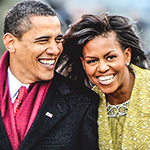
Barack and Michelle Obama are tops in a new study that ranks the brand power of famous people from brand-building firm MBLM
The BFF (Brand-Intimate Famous Figures) study measures such attributes as how strong of an emotional connection consumers feel toward a particular celebrity, how likely they are to buy products or donate to causes associated with that celebrity and how central that celebrity is to their day-to-day life. The combination of these factors results in what MBLM calls a public figure’s “Brand Intimacy Quotient,” an overall assessment of his or her strength as a brand.
Though the Obamas top the overall listings, there are significant differences in which celebrities are preferred by various demographic groups. While Barack Obama is No. 1 in the 18-34 and 35-54 age groups, he drops to No. 4 among respondents age 65 and up. Taking his place in the No. 1 spot for that group is president Trump, who doesn’t make it into the top five in the two younger demographics. The current president also leads among male survey respondents, while Michelle Obama takes the top position with female respondents.
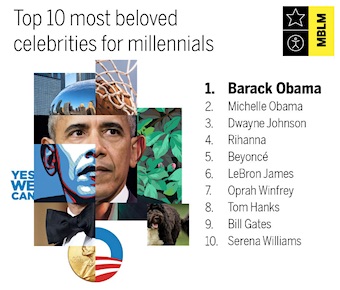 |
The only other political figure to crack the BFF Top 25 was Elizabeth Warren, who came in at No. 18. Bill Gates came in at No. 7, Pope Francis at No. 9 and The Dalai Lama at No. 13.
For the most part, however, the top celebrity brands among the survey respondents are from the worlds of entertainment and sports, with Tom Hanks in the No. 3 spot, and Dwayne Johnson, Paul McCartney, Oprah Winfrey and Rihanna all showing up in the Top 10.
When it comes to how much a celebrity influences the spending and donating decisions his or her admirers make, president Trump emerges as the clear winner, with 32 percent saying that they watch or buy products or services, or donate to causes associated with him. Only 18 percent of respondents who admire Barack Obama said the same, and that number is 17 percent for those with a positive impression of Michelle Obama.
The BFF study was the result of an online survey of 1,003 adults 18 and older that MBLM conducted from Oct. 23 to 26.

 Consumers who once demanded convenience now require consistent, multi-channel experiences that cater to them at every point. Brands must have a clear, audience-appropriate, and channel-specific voice across all platforms.
 Employees at U.S. companies are experiencing high levels of burnout, but managers are lagging behind when it comes to their awareness of the problem
 Brand has a powerful effect on a company’s valuation, but the level of brand understanding in the investment community leaves a lot to be desired, according to a new study from Brodeur Partners, Interbrand and NewtonX.
 AI may still be viewed with a wary eye by most media pros, but its use is growing, according to a new study from Muck Rack.
 A new study from Walker Sands says that some marketers have been putting the cart before the horse when it comes to the relationship between marketing channels and business outcomes.

 Have a comment? Send it to
No comments have been submitted for this story yet.