
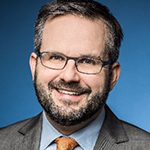
 Matthias Berninger |
Germany’s Bayer has suspended FleishmanHillard following reports in France's Le Monde that it compiled a dossier of about 200 politicians, journalists and scientists who raised health concerns about client Monsanto's “Roundup” weed killer.
The World Health Organization has called glyphosate, which is marketed as Roundup, a “probable carcinogen.” The US Environmental Protection Agency ruled that glyphosate is unlikely to cause cancer in humans.
Le Monde obtained the dossier, which was put together in 2016 ahead of a 2017 vote by the European Union on whether to approve the use of glyphosate for five years. The vote passed.
Bayer acquired Monsanto last year in a $63B deal.
The German pharmaceuticals and life sciences giant released a statement May 12, acknowledging the French media raised accusations that lists of supportive and critical stakeholders drawn up by Monsanto in 2016 may have violated ethical principles and legal regulations.
Though Bayer has no indication the dossier violated any law, it apologized for it and hired an outside law firm to investigate the matter. “This is not the way Bayer seeks dialogue with society and stakeholders,” said Bayer.
Matthias Berninger, Bayer's new head of public affairs and sustainability, is investigating the matter and will assess the behavior of the involved internal and external parties.
In its statement, FH said it is committed to ethical conduct.
"We believe in being open, transparent, responsible and legally compliant in our activities, including the use and handling of information," said the Omnicom unit. "Our work is in keeping with the professional standards and established practices of our industry."

 There’s a fine line between newsjacking and taking advantage, aka ambulance chasing. Our job as PR professionals is to tread it carefully.
 PR firms need to be mindful of ways their work product may be protected by the attorney-client privilege whenever working with a client’s internal legal team or its external legal counsel.
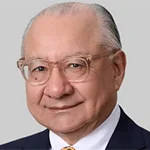 Manuel Rocha, former US ambassador and intenational business advisor to LLYC, plans to plead guilty to charges that he was a secret agent for Cuba.
 CEO mentoring is an often-overlooked aspect of why CEOs are able to make good decisions, and sometimes make bad ones—all of which intersects with the role and duties of a board.
  How organizations can anticipate, prepare and respond to crises in an increasingly complex world where a convergent landscape of global challenges, threats and risks seem to arrive at an unrelenting pace.
 Have a comment? Send it to
No comments have been submitted for this story yet.