
 |
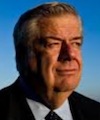
| Robert Dilenschneider |
Recent elections and other political developments around the world are likely to have a big effect on the global business environment. And the pace of change is such that The Dilenschneider Group is issuing this early note in advance of the Trend Report we normally deliver in September.
Consider:
• A new European Parliament—a body that can vote on legislation affecting the 512 million people of the 28 member states of the European Union–was just elected and the results, while not as extreme as many observers had feared, are still disturbing. The middle-of-the-road political parties that have dominated the Parliament until now lost ground to parties that are either far right or far left;
• The United Kingdom, already in turmoil because of Parliament’s inability to reach a consensus on exiting the EU, will soon have another Prime Minister. It remains to be seen whether this new leader can carry out Brexit in a way that keeps the U.K. from plunging into economic and commercial disorder, but a continuing period of business uncertainty lies ahead;
• In France, President Emmanuel Macron remains under fire from the yellow vests and other discontented groups. His ability to respond effectively and restore his nation’s social unity may have been weakened by the poor showing of his political party–a party that did not even exist until two years ago–in the European Parliamentary elections;
• Australia’s Prime Minister Scott Morrison–his country’s sixth PM in eight years–has won a close election in which he made promises that were popular but will be hard to keep, like lowering energy costs. His denial of climate change and his anti-immigrant policies appear to align him with other nationalist politicians who are on the rise;
• In India, Prime Minister Narenda Modi won reelection in a landslide, chiefly by playing on his Hindu nationalism. He says he intends to make his country every bit as powerful as China, and India certainly has the size, resources and highly educated elite to challenge the world’s second largest economy. The question is whether the price of Modi’s victory was a worsening of the religious tensions that already threaten social stability;
• Austria, Poland, Hungary, Turkey, Brazil and Italy have all moved to the hard right with the election of leaders who are nationalists, populists—and in the case of Turkey and Hungary—authoritarians;
• While there have been no recent elections in Russia, China or Iran, each of these nations has specific objectives often at odds with the rest of the world;
• And, of course, the race for The White House is underway, with 23 candidates competing for the Democratic nomination. President Trump is already in full campaign mode, and so America’s deep and often bitter political divisions are going to be intensified in the months ahead.
What does this mean for business? Uncertainty.
Companies will be used by political leaders around the world to achieve specific goals that are often not in the interests of business.
Look for more White House infighting and policy swings when it comes to setting the nation’s trade stance.
Expect pressure on the investors who are working to come into the West in whatever way they can.
Know that deals will probably be cut with the most unlikely nations—Russia, for example.
Expect the nation’s working class, its underemployed and its unemployed to be courted aggressively by candidates of both parties. And count on those candidates to make promises that will be hard or even impossible to keep, as well as being greeted with suspicion by voters who are sick of political gamesmanship.
Indeed, the loss of faith in the American political system may ultimately be the greatest source of uncertainty and instability in the years ahead.
***
Robert L. Dilenschneider is founder and chairman of The Dilenschneider Group, a global public relations and communications consulting firm headquartered in New York City. The former CEO of Hill and Knowlton, Inc., he is also author of more than a dozen books, including the best-selling “Power and Influence.”

 The techniques deployed by OJ Simpson's defense team in the 'trial of the century' served as a harbinger for those used by Donald Trump... People worry about the politicization of medical science just as much as they fret about another pandemic, according to Edelman Trust Barometer... Book bans aren't restricted to red states as deep blue Illinois, Connecticut and Maryland challenged at least 100 titles in 2023.
 The NBA, which promotes legalized gambling 24/7, seems more than hypocritical for banning player for placing bets... Diocese of Brooklyn promises to issue press release the next time one of its priests is charged with sexual abuse... Truth Social aspires to be one of Donald Trump's iconic American brands, just like Trump University or Trump Steaks or Trump Ice Cubes.
 Publicis Groupe CEO Arthur Sadoun puts competition on notice... Macy's throws in the towel as it appoints two directors nominated by its unwanted suitor... The Profile in Wimpery Award goes to the Ford Presidential Foundation for stiffing American hero and former Wyoming Congresswoman Liz Cheney.
 JPMorgan Chase chief Jamie Dimon's "letter to shareholders" is a must-read for PR people and others interested in fixing America and living up to its potential... Get ready for the PPE shortage when the next pandemic hits... Nixing Netanyahu. Gaza carnage turns US opinion against Israel's prime minister.
 Trump Media & Technology Group sees Elon Musk's X as an option for those who want the free expression promised by Truth Social but without Donald Trump, owner of 57.3 percent of TMTG... Chalk one up for "anti-woke warrior" governor Greg Abbott as University of Texas lays off 60 DEI-related staffers... Five percent of Americans see the US as its own worst enemy, according to Gallup.

 Have a comment? Send it to
No comments have been submitted for this story yet.