
 |
Fostering a diverse, inclusive workforce can help companies in areas ranging from recruitment to employee morale to brand engagement, a new study from Brodeur Partners finds.
Respondents who said that the company they worked for has “a very diverse workforce” were far more likely to rate employee morale as “excellent.” More than half (56.2 percent) of respondents from very diverse workplaces gave morale at their company a top rating, while only 23.3 percent of those from “somewhat, not very or not-at-diverse” workplaces said morale at their companies was excellent.
Diversity and inclusiveness also are a prime incentive for job seekers. The survey asked respondents to rate how important six factors were when making a decision about where they would like to work. While flexible working hours were the most attractive incentive across the board, diversity came in second for many groups, including women, African Americans and Hispanics, as well as for Gen Z and Millennial respondents.
Productivity on the job was also thought to increase in diverse workplaces. Nearly three in five respondents (59 percent) said they would be more productive in a workforce that includes people with different backgrounds.
When asked how a diverse workforce happens, respondents acknowledged the pivotal role that company policies play. About half of those at diverse companies (50.1 percent) said their employer actively recruits a diverse range of potential employees.
Diverse workforces also affect a company’s business policies, with 47. 1 percent of workers at diverse companies saying that their employer designs products and services for diverse communities. Slightly more (47.8 percent) said their employers engage diverse audiences through communications.
“This research cements the case that creating a welcoming, inclusive workplace ultimately improves the bottom line,” said Brodeur Partners first senior vice president of diversity and inclusion Angela Hayes.
The Brodeur Partners study surveyed a group of 1,592 people, weighted to reflect the national census, from July 22-29.

 Brand has a powerful effect on a company’s valuation, but the level of brand understanding in the investment community leaves a lot to be desired, according to a new study from Brodeur Partners, Interbrand and NewtonX.
 AI may still be viewed with a wary eye by most media pros, but its use is growing, according to a new study from Muck Rack.
 A new study from Walker Sands says that some marketers have been putting the cart before the horse when it comes to the relationship between marketing channels and business outcomes.
 Thought leadership can make made B2B brands more "powerful and attractive to buyers," according to Edelman report.
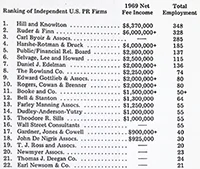 The deadline for O'Dwyer's 2024 rankings of PR firms, a benchmark study of the growth of the industry annually since 1970, is Mon., Mar. 11, 2024.


 Have a comment? Send it to
No comments have been submitted for this story yet.