
 |
More than four in five Americans are concerned that misinformation on social media is going to affect the outcome of next month’s presidential election, according to a Gallup/Knight Foundation poll.
Democrats are more concerned about misinformation than Republicans by a 62 percent to 36 percent margin, while independents clock in at 40 percent.
The poll found that Democrats, Republicans and independents stand united against spreading misinformation, even if helps their candidates.
Only three percent of respondents believe it’s okay to spread misinformation that is beneficial to politicians they support.
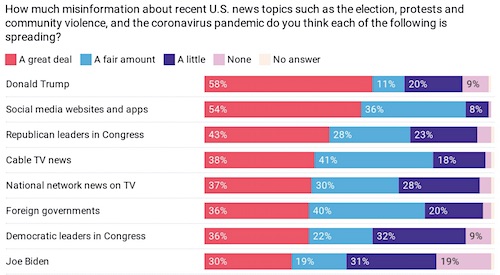 |
Respondents consider Donald Trump the top spreader of misinformation. Fifty-eight percent say the president is the source of great deal of misinformation about the election, protests, community violence and the COVID-19 pandemic.
Social media, websites and apps are next at 54 percent, followed by Republican leaders in Congress (43 percent), cable TV news (38 percent), network TV news (37 percent) foreign governments (36 percent), Democratic leaders in Congress (36 percent), Joe Biden (30 percent), major newspapers (29 percent), state elected officials (25 percent), federal agencies (19 percent), extended family, friends and co-workers (13 percent) and closest friends and immediate family members (seven percent).
The Gallup/Knight Foundation poll was conducted from Sept. 11-Sept. 24, which was before the presidential debate and before Trump came down with COVID-19.

 Consumers who once demanded convenience now require consistent, multi-channel experiences that cater to them at every point. Brands must have a clear, audience-appropriate, and channel-specific voice across all platforms.
 Employees at U.S. companies are experiencing high levels of burnout, but managers are lagging behind when it comes to their awareness of the problem
 Brand has a powerful effect on a company’s valuation, but the level of brand understanding in the investment community leaves a lot to be desired, according to a new study from Brodeur Partners, Interbrand and NewtonX.
 AI may still be viewed with a wary eye by most media pros, but its use is growing, according to a new study from Muck Rack.
 A new study from Walker Sands says that some marketers have been putting the cart before the horse when it comes to the relationship between marketing channels and business outcomes.


 Have a comment? Send it to
No comments have been submitted for this story yet.