
 |
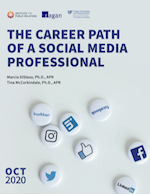
While most social media managers give themselves high marks for job performance, far fewer of them plan to stay in their present positions for more than a couple of years, according to a recently released study. Plus, most of them say that they spend less than half of their time on the job working on social-media related duties.
“The Career Path of a Social Media Professional,” conducted by the Institute for Public Relations Digital Media Research Center, Ragan Communications and the University of Florida, surveyed more than 400 social media managers to find out about their job roles and responsibilities, career ambitions, and the reporting and management structure at their companies.
Sixty percent of those surveyed rated their job performance as either above average (44 percent) or excellent (16 percent), and nearly all of the rest (36 percent) put themselves in the average category.
Those numbers were pretty similar when respondents were asked how their companies perceived their value, with 36 percent saying they were seen as average, 42 percent coming in at above average and 17 percent saying their perceived value was excellent.
However, only 13 percent of respondents said they would “definitely” be promoted to a more senior social media position, with 27 saying they would “probably” be promoted. On the other side a third (33 percent) said they would “probably not” or “definitely not” be promoted.
Perhaps because of that, few respondents plan to stick around in their position for the long haul. Almost a quarter (22 percent) said they were actively seeking new opportunities. Only 19 percent said they planned to be in their current role in five years’ time.
When it comes to which platforms they manage or are involved with, Facebook led the pack, with 81 percent of respondents mentioning it. Twitter (77 percent) was close behind, with LinkedIn (67 percent) and Instagram (66 percent) also scoring high. Snapchat’s best days seem to be behind it, however, with only eight percent saying it was part of their social media mix.
Close to a third (31 percent) of those surveyed said they were the only employee on their company’s social media team, while 51 percent said led a team of two or three people, and only six percent were on social media team with more than 11 employees.
Half of the respondents (50 percent) said their social media team was part of the larger communications/public relations functions, while 38 percent were part of their company marketing department, and just four percent were part of a standalone social media department.
To read the entire study, click here.

 Consumers who once demanded convenience now require consistent, multi-channel experiences that cater to them at every point. Brands must have a clear, audience-appropriate, and channel-specific voice across all platforms.
 Employees at U.S. companies are experiencing high levels of burnout, but managers are lagging behind when it comes to their awareness of the problem
 Brand has a powerful effect on a company’s valuation, but the level of brand understanding in the investment community leaves a lot to be desired, according to a new study from Brodeur Partners, Interbrand and NewtonX.
 AI may still be viewed with a wary eye by most media pros, but its use is growing, according to a new study from Muck Rack.
 A new study from Walker Sands says that some marketers have been putting the cart before the horse when it comes to the relationship between marketing channels and business outcomes.

 Have a comment? Send it to
No comments have been submitted for this story yet.