
 |
The best recipe for success in the current PR market? Be a healthcare-oriented firm. That’s the conclusion reached by a new survey from law firm Davis & Gilbert.
All of the healthcare PR firms that responded to the D&G survey reported that their profits were up this year, with 75 percent of them also registering an increase in revenue.
It’s been a bullish year for public affairs PR firms as well, with 67 percent of them saying that both profits and revenue rose. And over half (56 percent) of integrated marketing firms said they saw up an uptick in profits and revenue.
Another lesson from the past year: Bigger firms are better placed to withstand the effects of the public health, economic and social justice crises the PR market is confronting. A majority of firms with more than 50 employees recorded a rise in profits, while 55 percent of those with over 100 employees saw profits go up.
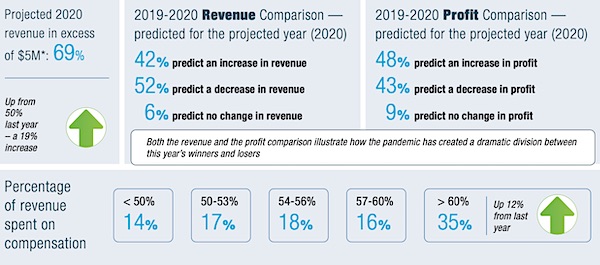 |
The numbers are not quite so rosy for the market as a whole, however, where only 37 percent of firms saw revenue rise for the first eight months of 2020, with 54 percent recording a revenue drop and nine percent saying that revenue was flat. Where profits are concerned, 49 percent said they were up, 39 percent said they were down, and 12 percent said they had stayed the same.
The impact of COVID-19 on the work environment will last well into next year, survey respondents said. Nearly every firm (98 percent) said that some component of their workforce will be working remotely for at least two days a week for the first quarter of 2021, with 61 percent saying they expect more than half of their workforce will be doing so. In addition, 62 percent of respondents indicated that they expect to permanently change their policies about working from home.
Concern with diversity-related issues was also high across the board, especially with more financially successful firms. All of the firms that reported increased revenue also said they had committed to increase their proportion of people of color by between 16 and 25 percent over the next six months.
Across all respondents, more than three quarters (76 percent) said they have increased diversity programs at their firms, with over half (53 percent) tracking and reporting workforce diversity data on an annual basis to create accountability.
Turning an eye toward the future, firms noted that they plan to keep several other strategies they have used to get through the crisis in place once the crisis is over. Those include engaging client teams remotely in creative ways, prioritizing retention and hiring practices, and making a greater investment in technology.
The majority of survey respondents also saw a silver lining to the current cloudy environment. Four out of five (80 percent) predict that their net revenue will rise in 2021, with only 14 percent expecting a drop.
The D&G study surveyed 87 respondents across North and South America, Europe, Asia and Australia/New Zealand. To read the entire report, click here.

 Brand has a powerful effect on a company’s valuation, but the level of brand understanding in the investment community leaves a lot to be desired, according to a new study from Brodeur Partners, Interbrand and NewtonX.
 AI may still be viewed with a wary eye by most media pros, but its use is growing, according to a new study from Muck Rack.
 A new study from Walker Sands says that some marketers have been putting the cart before the horse when it comes to the relationship between marketing channels and business outcomes.
 Thought leadership can make made B2B brands more "powerful and attractive to buyers," according to Edelman report.
 The deadline for O'Dwyer's 2024 rankings of PR firms, a benchmark study of the growth of the industry annually since 1970, is Mon., Mar. 11, 2024.


 Have a comment? Send it to
No comments have been submitted for this story yet.