
 |
Not only do marketing professionals say they are doing more with less these days, they are also trying to do that on a playing field where the goalposts keep moving, according to a new survey released by technology and business research company The Analyst Syndicate and events company SINC.
Perhaps the biggest of the challenges that the 150 marketing pros surveyed face is the degree to which budgets overall are shrinking. On average, those budgets were down by 42 percent for the second half of 2020. Only two respondents said that their marketing budgets had gone down by less than 20 percent, and 119 said that their budgets had shrunk by 40 percent or more.
Few of those surveyed think that marketing budgets are going to recover any time soon, either. Only 13 respondents said that they expected budgets to start bounding back by the end of 2020, while 105 think it will take most of 2021, or even beyond before any rebound is felt.
The move from live events to virtual ones is affecting how marketers are willing to allocate the budgets that remain. Only three respondents said that dinners and live roundtables are a priority in their budgets, with just 14 saying that tradeshows and conferences were a major focus. On the other side, 29 say they are prioritizing such digital assets as white papers or research, and 57 named digital marketing as the primary way they are spending their marketing dollars.
While a third of those surveyed said they were working on new products and marketing segments, most of them added that they did not have the go-to-market funding necessary to launch. Thirty-three percent of them said that they have less than half the budget that they feel is necessary to succeed.
In addition, a high level of uncertainty is making marketers’ jobs even more difficult. Almost half (48 percent) said they were uncertain about the economy and the course of the pandemic, with 26 percent adding that another worry was how their competition may be responding to COVID.
The study also does some speculating about when the effects of COVID may subside, bringing things back to a semblance of normality. That estimate provides for a one- to three-year wait for “pandemic freedom,” followed by a two- to four-year period of “budget recovery.”
But the study authors stress that just waiting things out is not the way to go. Incorporating the current uncertainty into budget requests and modifying those requests around new ideas and experimentation are two strategies they say could help marketers move into the best possible position as the business environment keeps on changing.
To see the full report, click here.

 Brand has a powerful effect on a company’s valuation, but the level of brand understanding in the investment community leaves a lot to be desired, according to a new study from Brodeur Partners, Interbrand and NewtonX.
 AI may still be viewed with a wary eye by most media pros, but its use is growing, according to a new study from Muck Rack.
 A new study from Walker Sands says that some marketers have been putting the cart before the horse when it comes to the relationship between marketing channels and business outcomes.
 Thought leadership can make made B2B brands more "powerful and attractive to buyers," according to Edelman report.
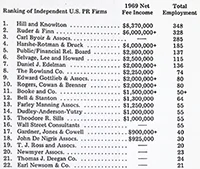 The deadline for O'Dwyer's 2024 rankings of PR firms, a benchmark study of the growth of the industry annually since 1970, is Mon., Mar. 11, 2024.


 Have a comment? Send it to
No comments have been submitted for this story yet.