
 |
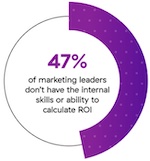
While eight out of 10 marketers say that they are under pressure to prove marketing ROI, almost half (47 percent) admit they don’t have the skills or ability necessary to calculate it, according to a new study conducted by Propeller Insights for marketing performance management company Allocadia.
The study asked more than 250 marketing executives, directors and managers about the status of ROI in their organizations.
One big problem cited is that marketers often do not trust their own data. A majority (61 percent) of those surveyed said that they are not confident in that data, and as a result, they don’t incorporate ROI into their decision-making.
That may account for why many marketers only measure ROI infrequently. Just 42 percent of respondents said they measure ROI monthly, and over 20 percent said they let at least six months go by between measurements.
However, those surveyed said that ROI remains the most critical measurement of assessing the effectiveness of marketing efforts, with 96 percent indicating that they use it. Because of that, improving ROI is a major concern, with 65 percent saying that has been a major focus for them over the past year.
Communicating the importance of ROI across all departments of a company is also seen as a challenge. More than four in 10 respondents (43 percent) say that marketing leaders are not aligned with finance and sales when it comes to ROI.
In addition, some respondents also said they didn’t have access to the budgets or budget decisions that they need to calculate the return on any of their marketing activities.
The report stresses that sharing that information is key to marketing success. “If finance doesn’t trust marketing’s version of ROI,” it notes, “they won’t be willing to grant any budget increases and spending will come under even further scrutiny.”
All of this comes as 84 percent of those surveyed agreed that marketing has grown in importance over the past year.

 Brand has a powerful effect on a company’s valuation, but the level of brand understanding in the investment community leaves a lot to be desired, according to a new study from Brodeur Partners, Interbrand and NewtonX.
 AI may still be viewed with a wary eye by most media pros, but its use is growing, according to a new study from Muck Rack.
 A new study from Walker Sands says that some marketers have been putting the cart before the horse when it comes to the relationship between marketing channels and business outcomes.
 Thought leadership can make made B2B brands more "powerful and attractive to buyers," according to Edelman report.
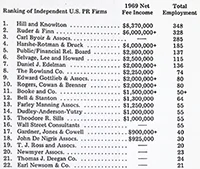 The deadline for O'Dwyer's 2024 rankings of PR firms, a benchmark study of the growth of the industry annually since 1970, is Mon., Mar. 11, 2024.


 Have a comment? Send it to
No comments have been submitted for this story yet.