
 |
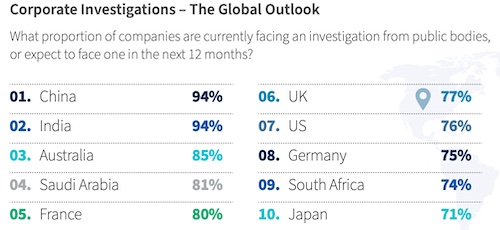
More than eight in ten (83 percent) executives at large companies across the G20 countries say their firm is either under investigation or expects to be during the next 12 months, according to FTI Consulting’s Resilience Barometer.
“A new era of unforgiving public scrutiny, outdated business models and the repercussions of the pandemic are some of the diverse—yet interlinked—risks that are driving C-suite concerns today,” according to the RB. “Companies face relentless pressure to withstand public, government and regulatory scrutiny; to meet growing stakeholder expectations; and to transform working practices and culture like never before.”
While executives worry about the emergence of a new strain of vaccine-resistant COVID-19, the greater worry is about the longer term socio-economic issues exposed by the pandemic.
 |
“COVID-19 has exposed and exacerbated economic and social fault lines—employee wellbeing, talent shortages, treatment of customers, financial crime and cybersecruity all have risen up the corporate agenda, and businesses are responding to protect value and build resilience as they look towards future growth,” said Caroline Das-Monfrais, senior managing director & global resilience lead at FTI.
The RB also gauged the impact of the “great resignation” of employees re-assessing their careers due to the impact.
Thirty percent of companies experienced a shortage of talent during the past year, while 68 percent cited an upswing in mental health issues since the start of the pandemic.
The FTI survey polled 2,869 decision-makers at companies with more than 250 employees and at least $50M in annual revenues.

 Brand has a powerful effect on a company’s valuation, but the level of brand understanding in the investment community leaves a lot to be desired, according to a new study from Brodeur Partners, Interbrand and NewtonX.
 AI may still be viewed with a wary eye by most media pros, but its use is growing, according to a new study from Muck Rack.
 A new study from Walker Sands says that some marketers have been putting the cart before the horse when it comes to the relationship between marketing channels and business outcomes.
 Thought leadership can make made B2B brands more "powerful and attractive to buyers," according to Edelman report.
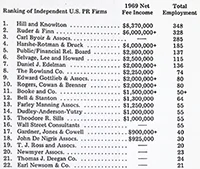 The deadline for O'Dwyer's 2024 rankings of PR firms, a benchmark study of the growth of the industry annually since 1970, is Mon., Mar. 11, 2024.

 Have a comment? Send it to
No comments have been submitted for this story yet.