
 |
WPP agreed today to pay $19M to settle Securities and Exchange Commission charges that it violated anti-bribery and internal accounting controls measures of the Foreign Corrupt Practices Act.
The SEC alleges WPP carried out an aggressive acquisition push in high-risk markets and failed to apply its internal accounting controls and compliance policies, allowing financial autonomy to the founders/CEOs of the target companies.
The federal watchdog claims that due to structural deficiencies, WPP failed to promptly respond to warning signs of corruption at various subsidiaries.
It cited a WPP India unit that continued to bribe government officials in return for advertising contracts, even though WPP received tips about that misconduct.
The SEC order also covers control deficiencies in China, Brazil and Peru.
Neither denying nor admitting the SEC findings, WPP agreed to cease and desist from committing violations of the anti-bribery, books and records, and internal accounting controls provisions of the FCPA.
It will pay $10.1 million in disgorgement, $1.1 million in prejudgment interest, and an $8 million penalty.
"A company cannot allow a focus on profitability or market share to come at the expense of appropriate controls," said Charles Cain, the SEC's FCPA unit chief. "Further, it is essential for companies to identify the root cause of problems when red flags emerge to prevent a pattern of corrupt behavior from taking hold."
WPP notes the SEC probe covered activities that occurred under the leadership of founder/Martin Sorrell, who stepped down in 2018.
"The Commission's findings relate to control issues as well as the acquisition and integration of companies in high-risk markets until 2018, it noted in a statement. "As the Commission's Order recognizes, WPP's new leadership has put in place robust new compliance measures and controls, fundamentally changed its approach to acquisitions, cooperated fully with the Commission and terminated those involved in misconduct."

 There’s a fine line between newsjacking and taking advantage, aka ambulance chasing. Our job as PR professionals is to tread it carefully.
 PR firms need to be mindful of ways their work product may be protected by the attorney-client privilege whenever working with a client’s internal legal team or its external legal counsel.
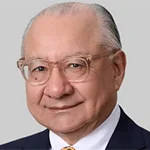 Manuel Rocha, former US ambassador and intenational business advisor to LLYC, plans to plead guilty to charges that he was a secret agent for Cuba.
 CEO mentoring is an often-overlooked aspect of why CEOs are able to make good decisions, and sometimes make bad ones—all of which intersects with the role and duties of a board.
  How organizations can anticipate, prepare and respond to crises in an increasingly complex world where a convergent landscape of global challenges, threats and risks seem to arrive at an unrelenting pace.

 Have a comment? Send it to
Sep. 27, 2021, by Joe Honick
One of the best damned responses to a "situation" I have read while smiling! Apparently there was no version of General Mark Milley around to say "wait a minute!!"...or anyone interested. When there is this kind of cash so readily available to keep people from greater punishment, it suggests the problem might have been expected and reserves set up to cover the situation....not unlike Trump kept from testifying under oath over his phony real estate school by writing a check for $25 million.