
 |
Consumers are shopping directly on social media channels more than ever, often bypassing traditional online retailers, according to a new study from the Influencer Marketing Factory.
The survey polled 1,000 people ages 16 to 54 between Dec. 9 and 14, asking them if they shop on social media, what their preferences are when it comes to social commerce usage and their preferences when shopping online or via a livestream.
More than eight in 10 respondents said that they had discovered a product on social media and then purchased it directly through the related app, with 73 percent adding that they had done so during the 2021 holiday season. In addition, 41 percent said that they prefer to check out potential purchases on a social media app, rather than using a third-party site.
When it comes to the power of online influencers, IMF found that 90 percent of respondents think that influencer marketing is effective.
 |
The study also cites numbers from eMarketer that back up the case for social commerce’s rise. Bewteen 2019 to 2020, social commerce made a 38.9 percent jump in sales, from $19.42B to $26.97B. EMarketer projects that the number will rise to $79.64B by 2025.
Apparel was listed as the top choice (22 percent) when survey respondents were asked what type of product they bought most often via social media, followed by beauty products (15 percent), home products (11 percent) and food & beverage (10 percent).
The shift toward social media shopping is strongest among Gen Z consumers, IMF’s research on social commerce shows, with 97 percent of Gen Zers saying that they use social media as their top source of shopping inspiration.
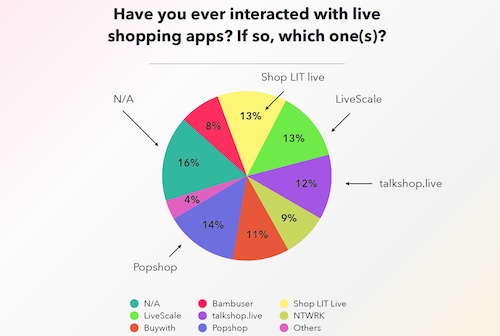
Livestreaming is also on the rise. More than half (57 percent) of the survey respondents said that they had made a purchase during a livestream shopping event. They also seem to like the livestream experience, with 72 percent giving it at least a nine on a scale of one to 10.
The study notes the power of online product reviews. On a scale of one to five, respondentsranked the importance of those reviews at a solid 4.3
Not surprisingly, in-store shopping is continuing its downward trajectory. For consumers over 45, just 30 percent said they preferred making in-store purchases, with 38 percent opting to shop online and 31 percent using a combination of the two.
For younger consumers, the move away from brick-and-mortar is even more pronounced. Just eight percent of respondents under 18 said they preferred to shop in stores, and that number crawls up just slightly for those who are 18-24 (13 percent), 25-34 (14 percent) and 35-44 (nine percent).

 Consumers who once demanded convenience now require consistent, multi-channel experiences that cater to them at every point. Brands must have a clear, audience-appropriate, and channel-specific voice across all platforms.
 Employees at U.S. companies are experiencing high levels of burnout, but managers are lagging behind when it comes to their awareness of the problem
 Brand has a powerful effect on a company’s valuation, but the level of brand understanding in the investment community leaves a lot to be desired, according to a new study from Brodeur Partners, Interbrand and NewtonX.
 AI may still be viewed with a wary eye by most media pros, but its use is growing, according to a new study from Muck Rack.
 A new study from Walker Sands says that some marketers have been putting the cart before the horse when it comes to the relationship between marketing channels and business outcomes.


 Have a comment? Send it to
No comments have been submitted for this story yet.