
 |
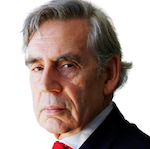
| Gordon Brown |
Phil Revzin, counselor at The Dilenschneider Group, helped former UK prime minister Gordon Brown prepare his March 10 op-ed calling for the US to back European leaders who want Russian president Vladimir Putin and his cronies to be prosecuted for the slaughter in Ukraine.
Since Russia never signed the International Criminal Court agreement establishing aggression as a war crime, there’s a need for a special tribunal to deal with Putin’s brutality.
“A tribunal would also send a message to Putin and his inner circle that their brutal criminality will not escape trial and punishment,” wrote Brown.
“It would sow fear among Putin’s inner circle, if not Putin himself. Just as those complicit with Nazi crimes started to peel away from their leader and seek private deals, so, too, may Putin’s collaborators begin to cooperate with the forces of justice.”
Revzin spent more than 30 years at the Wall Street Journal as reporter/editor/publisher/VP and did a stint as editor at large at Bloomberg, which published Brown’s op-ed.

 There’s a fine line between newsjacking and taking advantage, aka ambulance chasing. Our job as PR professionals is to tread it carefully.
 PR firms need to be mindful of ways their work product may be protected by the attorney-client privilege whenever working with a client’s internal legal team or its external legal counsel.
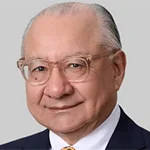 Manuel Rocha, former US ambassador and intenational business advisor to LLYC, plans to plead guilty to charges that he was a secret agent for Cuba.
 CEO mentoring is an often-overlooked aspect of why CEOs are able to make good decisions, and sometimes make bad ones—all of which intersects with the role and duties of a board.
  How organizations can anticipate, prepare and respond to crises in an increasingly complex world where a convergent landscape of global challenges, threats and risks seem to arrive at an unrelenting pace.


 Have a comment? Send it to
Mar. 10, 2022, by Joe Honick
No surprise Brown would want the wisdom, experience and maturity of a Dilenschneider level counselor for such a task. The Revzin resume, past and present, presents those reliable strengths. No doubt as well that Revzin and Brown are most sensitive to the reality a circumstance approaching or actual war would have to exist for a tribunal representative to be empowered entry to Russia and put the cuffs on Putin.
Defeat is what put those Nazis in the grip of allies for the Nuermberg trials and others that followed. Remember: while Hitler was savagely consuming Europe, we did not get a real crack at his and his cronies until some critical "paperwork" was accomplished. It has had to be emergence of the heretofore silent Saudis that should open doors of thought and worry, especially with their insulting refusal even to take a call from Joe Biden the other day.
There are more shoes to drop before the full impact of this sad, bloody and dangerous situation is clear. Too many seemingly disparate pieces to be connected.