
 Ronn Torossian |
French fashion brand Lacoste boasts one of the most well-known logos in the world of international fashion. That crocodile is iconic, immediately recognizable. So, why would a company with such massive brand recognition change it up and run the risk of making their clothes look like knockoffs? For a great cause, of course.
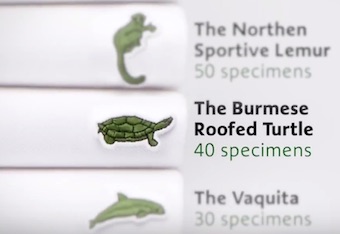
Lacoste partnered with the International Union for Conservation of Nature and a Paris-based ad agency to kick off the “Save Our Species” campaign. The program hoped to work toward the protection of wildlife across the globe. Lacoste’s participation involved changing out the iconic croc and replacing it with ten different endangered animals. What did they do well in this campaign? Well, lots of things …
 |
First, the timing was excellent. Lacoste and its promotional partners picked an event that was sure to already have tons of media present, their runway show at Paris Fashion Week. This guaranteed there would not only be media there, but it would be media that was very familiar with the brand, so they would notice a difference. Plus — and this is vital — the media was specifically there looking for a story. An iconic brand switching up their logo in such a dramatic way was definitively low-hanging fruit for fashion media.
Because of this context, there was also no brand confusion. Everyone at Fashion Week knew it was Lacoste, so they knew there was a story behind the switch. Asking what that story might be was the natural next step.
Also, they came up with some creative details. Each shirt with a different animal for the logo had a very limited supply. How limited? The number of shirts produced corresponded directly with the number of animals still in the wild. If you wanted a Javan Rhino shirt, you had to be one of the first 67 people. If you liked the Cao-vit Gibbon, you had somewhat better odds: 1 of 150.
All told, Lacoste produced fewer than 1,800 of the specialty polo shifts, a stark reminder of just how close several species are to extinction. The specific numbers were guaranteed to get at least some coverage in multiple media stories, due to the fact that journalists love hard numbers. This helped sell the fundamental aspect of the story: that conservation is vital, these groups are working to support it and you can too.
For Lacoste, the campaign was successful for several other reasons, primarily that it elevated the brand in the eyes of consumers who may not otherwise buy Lacoste. While the brand is famous, its customers are mainly sportsmen. Now, though, people who never cared to play tennis have a positive connection with the brand.
***
Ronn Torossian is CEO of 5WPR, a leading NY PR Agency.

 Republican tough guys Josh Hawley and Tom Cotton want Biden to send the National Guard to Columbia University to put an end to student protests... Bernie blasts Bibi for insulting America's intelligence by equating criticism of Israel's government with antisemitism... German court convicts former financial PR exec who claims he wasn't aware that trading on tips is illegal.
  Southern governors claim they know what's best for their working class, and it's not pay raises... A Ukrainian human rights group played a key role in convincing House Speaker Mike Johnson to hold a vote to send arms to Ukraine, Israel and Taiwan... Trump Media & Technology Group blames short-selling and not lousy outlook for its stock slump.
 The techniques deployed by OJ Simpson's defense team in the 'trial of the century' served as a harbinger for those used by Donald Trump... People worry about the politicization of medical science just as much as they fret about another pandemic, according to Edelman Trust Barometer... Book bans aren't restricted to red states as deep blue Illinois, Connecticut and Maryland challenged at least 100 titles in 2023.
 The NBA, which promotes legalized gambling 24/7, seems more than hypocritical for banning player for placing bets... Diocese of Brooklyn promises to issue press release the next time one of its priests is charged with sexual abuse... Truth Social aspires to be one of Donald Trump's iconic American brands, just like Trump University or Trump Steaks or Trump Ice Cubes.
 Publicis Groupe CEO Arthur Sadoun puts competition on notice... Macy's throws in the towel as it appoints two directors nominated by its unwanted suitor... The Profile in Wimpery Award goes to the Ford Presidential Foundation for stiffing American hero and former Wyoming Congresswoman Liz Cheney.

 Have a comment? Send it to
No comments have been submitted for this story yet.