
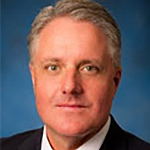
 Fred Jacobs |
Fred Jacobs, former VP-communications at SeaWorld, has agreed to settle a fraud charge for his role in misleading investors and to pay $100K disgorgement charges and prejudgment interest, according to the Securities and Exchange Commission.
The SEC announced Jacobs' settlement as part of the $5M fraud settlement with SeaWorld Entertainment and ex-CEO James Atchinson for their roles in misleading investors about the impact of the 2013 film "Blackfish," which criticized the company’s treatment of its killer whales.
The SEC complaint alleged that SeaWorld and Atchinson from December 2013 through August 2014 “made untrue and misleading statements or omissions in SEC filings, earnings releases and calls, and other statements to the press regarding Blackfish’s impact on the company’s reputation and business.”
According to the complaint, on Aug. 13, 2014, “when SeaWorld for the first time acknowledged that its declining attendance was partially due to negative publicity, SeaWorld’s stock price fell, causing significant losses to shareholders.”
Steven Peikin, co-director of the SEC enforcement division, said the case underscores the need for companies to provide investors with timely and accurate information that has an adverse impact on its business.
“SeaWorld described its reputation as one of its ‘most important assets,’ but it failed to evaluate and disclose the adverse impact Blackfish had on its business in a timely manner," he said in a statement.
Without admitting or denying the allegations, SeaWorld agreed to pay a $4M penalty and Atchison will pay a $1M penalty.
Jacobs retired in December 2015, after a 25-year career at SeaWorld.

 There’s a fine line between newsjacking and taking advantage, aka ambulance chasing. Our job as PR professionals is to tread it carefully.
 PR firms need to be mindful of ways their work product may be protected by the attorney-client privilege whenever working with a client’s internal legal team or its external legal counsel.
 Manuel Rocha, former US ambassador and intenational business advisor to LLYC, plans to plead guilty to charges that he was a secret agent for Cuba.
 CEO mentoring is an often-overlooked aspect of why CEOs are able to make good decisions, and sometimes make bad ones—all of which intersects with the role and duties of a board.
  How organizations can anticipate, prepare and respond to crises in an increasingly complex world where a convergent landscape of global challenges, threats and risks seem to arrive at an unrelenting pace.


 Have a comment? Send it to
No comments have been submitted for this story yet.