
 |
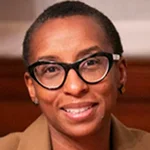
| Claudine Gay |
Edelman has counseled Harvard University and its PA unit after the turmoil triggered by its first messaging about the Hamas attack on Israel.
Harvard’s initial response was a “Joint Statement by Harvard Palestine Solidarity Groups on the Situation in Palestine” which “holds the Israeli regime entirely responsible for all of the unfolding violence.”
The administration was “heartbroken by the death and destruction unleased by the attack by Hamas.”
The response was attacked as weak and out-of-touch and triggered calls for the resignation of Harvard president Claudine Gay.
Her subsequent statements dealt with plans to fight antisemitism on campus, condemned Islamophobia and all forms of bigotry, reaffirmed freedom of speech and censored the pro-Palestine slogan “from the river to the sea,” according to the Harvard Crimson.
Richard Edelman, Harvard grad, blogged about Gay’s response in a piece called “Why Leaders Must Speak Up.”

 There’s a fine line between newsjacking and taking advantage, aka ambulance chasing. Our job as PR professionals is to tread it carefully.
 PR firms need to be mindful of ways their work product may be protected by the attorney-client privilege whenever working with a client’s internal legal team or its external legal counsel.
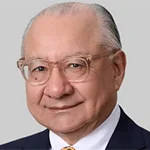 Manuel Rocha, former US ambassador and intenational business advisor to LLYC, plans to plead guilty to charges that he was a secret agent for Cuba.
 CEO mentoring is an often-overlooked aspect of why CEOs are able to make good decisions, and sometimes make bad ones—all of which intersects with the role and duties of a board.
  How organizations can anticipate, prepare and respond to crises in an increasingly complex world where a convergent landscape of global challenges, threats and risks seem to arrive at an unrelenting pace.


 Have a comment? Send it to
Dec. 5, 2023, by Bill Huey, Strategic Communications
Advice to Harvard President Gay can be summarized as follows: "Show some spine or else resign."