
 |
AI may still be viewed with a wary eye by most media pros, but its use is growing, according to a new study from Muck Rack.
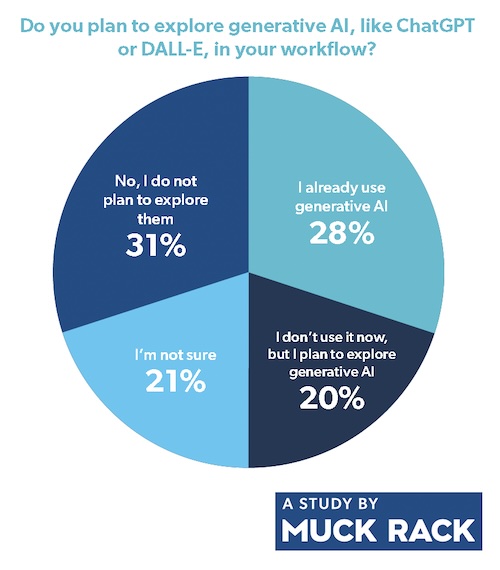
According to the PR management platform’s State of Journalism 2024 report, which surveyed more than 1,106 people (mostly U.S.-based journalists) from Jan. 3 to Feb. 9, more than a quarter of respondents (28 percent) currently use generative AI in their work, with another 20 percent saying that they are planning to explore its uses.
That still falls behind the percentage of PR pros (64 percent) who reported using AI in the platform’s most recent State of AI in PR report.
For the journalists who have opted in on AI, the two most popular uses are brainstorming (52 percent) and research (51 percent). AI is also being used to draft headlines (34 percent), outlines (31 percent), social posts (28 percent) and story copy (20 percent).
 |
However, media organizations are proving to be rather slow to develop rules for handling AI. Only 24 percent of respondents said that their newsrooms had AI case policies for AI, with just 13 of the rest saying that they planned to have one.
Social media also remains a pivotal tool for journalists to use in producing their work, with 33 percent rating it as very important, 18 percent as important and 21 percent as moderately important.
However, social media’s major value for journalists lies in promoting their work. Almost half (47 percent) of survey respondents said that it was a “very important” tool for getting out the word about their stories, with 23 percent calling it important and 17 saying it is moderately important.
The most valuable social media channel for journalists is X, which is cited by 36 percent of respondents. Facebook sits at second (22 percent), with LinkedIn (17 percent) and Instagram following behind. The study authors also note that “only a few people mention Meta’s X alternative, Threads.”
In addition, more than eight in 10 (81 percent) said that they plan to stay on X.

 Consumers who once demanded convenience now require consistent, multi-channel experiences that cater to them at every point. Brands must have a clear, audience-appropriate, and channel-specific voice across all platforms.
 Employees at U.S. companies are experiencing high levels of burnout, but managers are lagging behind when it comes to their awareness of the problem
 Brand has a powerful effect on a company’s valuation, but the level of brand understanding in the investment community leaves a lot to be desired, according to a new study from Brodeur Partners, Interbrand and NewtonX.
 A new study from Walker Sands says that some marketers have been putting the cart before the horse when it comes to the relationship between marketing channels and business outcomes.
 Thought leadership can make made B2B brands more "powerful and attractive to buyers," according to Edelman report.


 Have a comment? Send it to
No comments have been submitted for this story yet.