
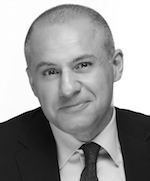
 Ronn Torossian |
Tesla, Inc. has been battling ups and downs in recent years. Every time the company breaks through another impossible barrier, it seems another barrier is waiting to block its progress. In recent years, it was the slow production of the Model 3 and the oft-delayed development of a Tesla pickup. Now, a California safety agency is investigating Tesla’s Fremont, CA factory. Multiple media reports say Cal-OSHA announced the investigation, but didn’t disclose what may have triggered the investigation, so speculation is now running wild. So far, the only official statement made about the inspection was “we take seriously reports of workplace hazards … work-related injuries and illnesses …”
Right now, the only other thread reporters are tugging on in this case is a rumor that Tesla hasn’t been properly reporting work-related injuries at the Fremont plant. One such article alleged that Tesla has “artificially lowered” the total number of injuries by claiming some of those injuries were more minor than they actually were, or that they were really personal medical issues as opposed to work-related injuries. While Tesla hasn’t replied officially in the media, the company did publish a blog post countering the rumors about under-reported injuries. In the blog post, Tesla called the rumors: “a calculated disinformation campaign against Tesla …”
Others are claiming Tesla is objecting too much to a company doing its job. In recent years, Cal-OSHA has investigated Tesla 20 times. Results varied. Sometimes the complaints were dismissed. Sometimes, Tesla was fined. Speaking to the media, Tesla says that’s to be expected: “Cal-OSHA is required to investigate any claims that are made, regardless of whether they have merit or are baseless (as we believe these are), and we always provide our full cooperation …”
It looks like we’ll have to wait until this investigation is completed to see which direction the headlines will run on this one. If Tesla has been under-reporting its work-related injuries, that could be a nagging public relations problem, as the company is trying to get its Model 3 program back on track. Especially since the company has said it has a much better safety record than the two previous automakers that operated out of that plant. Meanwhile, Tesla founder Elon Musk is focused on the lagging Model 3 production. The company recently had to temporarily pause production to address several production problems. Now, Musk is promising the company will run 24/7 to get production caught up.
With that kind of schedule, workplace safety will certainly be a focus, for both the company and safety watchdogs.
***
Ronn Torossian is CEO of NY PR agency 5WPR.

 There’s a fine line between newsjacking and taking advantage, aka ambulance chasing. Our job as PR professionals is to tread it carefully.
 PR firms need to be mindful of ways their work product may be protected by the attorney-client privilege whenever working with a client’s internal legal team or its external legal counsel.
 Manuel Rocha, former US ambassador and intenational business advisor to LLYC, plans to plead guilty to charges that he was a secret agent for Cuba.
 CEO mentoring is an often-overlooked aspect of why CEOs are able to make good decisions, and sometimes make bad ones—all of which intersects with the role and duties of a board.
  How organizations can anticipate, prepare and respond to crises in an increasingly complex world where a convergent landscape of global challenges, threats and risks seem to arrive at an unrelenting pace.

 Have a comment? Send it to
No comments have been submitted for this story yet.