
 |
| Richard Edelman |
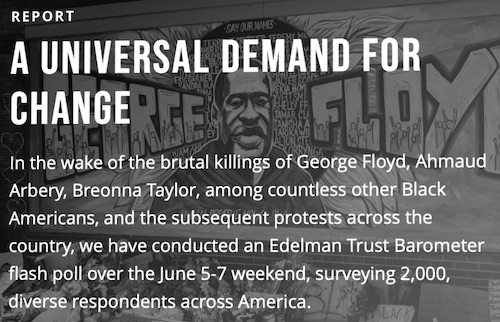
Americans say brands have a moral obligation to address systemic racism, according to an Edelman Trust Barometer flash poll released following the murder of George Floyd. The poll of 2,000 was conducted from June 5-7.
Sixty percent of respondents believe brands must speak out against racial injustice and plan to either buy or boycott them based on their response to the Black Lives Matter protest.
Young adults (18 to 34) are more proactive in their response, with 78 percent demanding brands take a stand vs. 48 percent of people over 55.
 |
Respondents say moral obligation (56 percent) is the No. 1 reason for brand action, followed by "owe it to employees" at 52 percent.
"Brands are now assumed to have more power than their corporate parents, as they are more flexible and responsive to consumer input," said Richard Edelman in releasing the poll results.
Seventy percent of people of color want brands to use marketing dollars to advocate for racial equality. Those promises must be backed by action or brands risk being viewed as exploitative (63 percent).
Nearly four out of ten (37 percent) of respondents have tried to convince others to start or stop using a brand based on its racial inequality stand.
Friends and family are the most influential sources of information in shaping views on racism, especially for women (45 percent) and Black and Latinx respondents. Older respondents (55+) turn to mainstream media while younger adults look to social media.
Edelman said, "brands can no longer dodge America’s original sin and third rail: systemic racism and inequality."
He noted that brands connect in a different way than corporations and CEOs because they inspire, motivate and offer hope.
"The relationship of trust between brand and consumer now depends on tangible actions destined to change the course of history," said Edelman.

 Consumers who once demanded convenience now require consistent, multi-channel experiences that cater to them at every point. Brands must have a clear, audience-appropriate, and channel-specific voice across all platforms.
 Employees at U.S. companies are experiencing high levels of burnout, but managers are lagging behind when it comes to their awareness of the problem
 Brand has a powerful effect on a company’s valuation, but the level of brand understanding in the investment community leaves a lot to be desired, according to a new study from Brodeur Partners, Interbrand and NewtonX.
 AI may still be viewed with a wary eye by most media pros, but its use is growing, according to a new study from Muck Rack.
 A new study from Walker Sands says that some marketers have been putting the cart before the horse when it comes to the relationship between marketing channels and business outcomes.

 Have a comment? Send it to
No comments have been submitted for this story yet.