
 |
Consumer tech marketers are missing the boat when it comes to the 117 million Americans over the age of 50, according to a new study from Clarity.
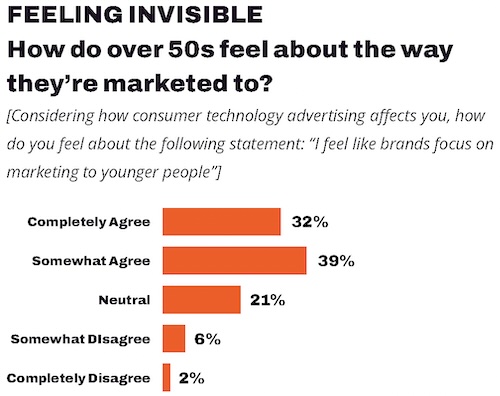
More than seven in 10 (71 percent) of the 1,000 consumers over 50 surveyed for the study said that they think consumer tech is mainly marketed to younger people. For those between 65 and 69, that number climbs to 80 percent. Close to half (46 percent) of all those surveyed feel that brands do not market directly to their generation at all.
And even when marketers do target older consumers, there seems to be something of an attitude problem. 43 percent of survey respondents note a patronizing tone in marketing directed toward their generation.
A big misconception about older consumers, the study says, is that they are “analog people living in a digital age,” with a lack of technical knowledge and a corresponding lack of interest in new technology.
 |
However, more than a third (37 percent) of respondents consider themselves at least moderately tech-savvy and 41 percent say they are “more tech-savvy than their family perceives them to be.” Two-thirds (67 percent) also report that they’d like to be more tech-savvy.
In addition, just about all the survey respondents have incorporated smart devices into their lives in a big way. A full 98 percent of them say that they use smart devices on a daily basis, with the other 2 percent reporting that make at least weekly use of them.
The tech products that older consumers buy are not limited to just computers (86 percent) and tablets (62 percent). Such devices as doorbells (30 percent), indoor/outdoor security cameras (27 percent) and smart speakers (26 percent) are also relatively popular with consumers over 50. Nearly half (45 percent) of respondents were interested in purchasing additional smart home tech products.
Leaving older consumers behind in marketing efforts can deprive tech companies of a large and dependable audience, according to the study. Almost three-quarters (75 percent) of respondents describe themselves as loyal to brands they like. More than half (58 percent) also see themselves as brand advocates, vocal about their favorite brands.
“Over 50s are looking for consumer technology, specifically smart tech, that falls into the following categories: health, security, convenience, and above all, costs savings,” the study authors note. “Tailoring messaging to these core needs is how consumer tech brands can win big with this demographic.”
The Clarity study was conducted by 3Gem Research & Insights between Aug. 31 and Sept. 12.

 Consumers who once demanded convenience now require consistent, multi-channel experiences that cater to them at every point. Brands must have a clear, audience-appropriate, and channel-specific voice across all platforms.
 Employees at U.S. companies are experiencing high levels of burnout, but managers are lagging behind when it comes to their awareness of the problem
 Brand has a powerful effect on a company’s valuation, but the level of brand understanding in the investment community leaves a lot to be desired, according to a new study from Brodeur Partners, Interbrand and NewtonX.
 AI may still be viewed with a wary eye by most media pros, but its use is growing, according to a new study from Muck Rack.
 A new study from Walker Sands says that some marketers have been putting the cart before the horse when it comes to the relationship between marketing channels and business outcomes.


 Have a comment? Send it to
No comments have been submitted for this story yet.