
 |
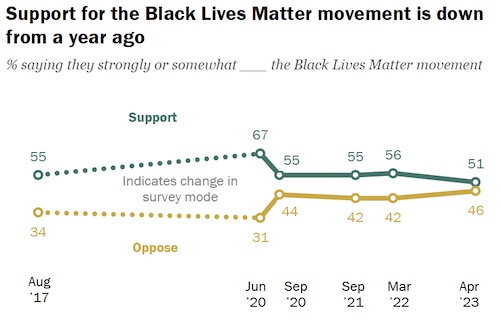
A little more than half (51 percent) of Americans support the Black Lives Matter movement, down from 67 percent in 2020 following the murder of George Floyd at the hands of Minneapolis cops, according to a survey from the Pew Research Center.
One of the reasons for the decline in public support: only 31 percent of the respondents understand the goals of BLM “extremely or very well.”
The BLM has got to get its messaging out.
Pew found that 34 percent of Americans view BLM as divisive and a third of the respondents consider it dangerous.
 |
Only 26 percent call BLM empowering and 18 percent label it as inclusive.
A little more than three in ten (32 percent) of Americans say BLM brings attention to racism against Black people extremely or very well.
Thirty-five percent say the group is “somewhat” successful and 30 percent say “not to or not at all.”
The bottom line: forty percent of Americans believe the increased focus on racism and racial inequality following Floyd’s death has improved the lives of Black people.
Sixty percent say the increased focus hasn't changed much in the Black community.

 Consumers who once demanded convenience now require consistent, multi-channel experiences that cater to them at every point. Brands must have a clear, audience-appropriate, and channel-specific voice across all platforms.
 Employees at U.S. companies are experiencing high levels of burnout, but managers are lagging behind when it comes to their awareness of the problem
 Brand has a powerful effect on a company’s valuation, but the level of brand understanding in the investment community leaves a lot to be desired, according to a new study from Brodeur Partners, Interbrand and NewtonX.
 AI may still be viewed with a wary eye by most media pros, but its use is growing, according to a new study from Muck Rack.
 A new study from Walker Sands says that some marketers have been putting the cart before the horse when it comes to the relationship between marketing channels and business outcomes.


 Have a comment? Send it to
No comments have been submitted for this story yet.